Thursday, March 28, 2019

Hacienda Puerta Campeche

Hacienda Puerta Campeche and Calle 59
Puerta de la Tierra
When we got to Hacienda Puerta Campeche we were right downtown on the main street, Calle 59, at the old wall and the Puerta de la Tierra. Perfect location to explore the city of Campeche. The Hacienda Puerta Campeche is located within the cities's walled historic district which makes it walking distance to everything. The hacienda is a Luxury Collection Resort.


Puerta de la Mar and the Wall
UpStairs Room and Pool
Today the Hacienda boasts an indoor/outdoor pool twisting maze-like through its beautifully renovated rooms. The fully restored 17th century property features traditional Maya-tiled floors,18-foot ceilings with exposed beams and that unbelievable pool that winds through the property like a snake. We had a great second story room that was up the stairs and above the pool with a hammock in the room. 


Pool with Hammock
Pool in the Old Buildings
Room Upstairs at Hacienda 
Hacienda Puerta Campeche was originally a warehouse at the Puerta de la Tierra where goods were brought and stored until they were transported on Calle 59 to the Puerta de la Mar and transferred to ships for trade throughout the Caribbean area. The hotel is now a converted row of 17th century houses, the warehouse and the urban mansion that once stood there.


View out the Upstairs Window
Campeche was founded in 1540 by Francisco Montejo and it was was terrorized by pirates and marauders until the city decided to build the wall in 1686 due to the constant attacks of both English and Dutch buccaneers and pirates such as Francis Drake and Jean Lafitte. It was the days of the real pirates of the Caribbean. The main gates are the Puerta de la Tierra (Land Gate), built in 1732 and the Puerta del Mar (Sea Gate) at each end of Calle 59. 


Campeche Main Plaza
Though Francisco Montejo founded Campeche,  the first two Spanish explorers to reach the area were Jerónimo de Aguilar and Gonzalo Guerrero. They were survivors of a shipwreck in 1511 who were taken in by Maya villagers. Guerrero married the daughter of the Chetumal chief, and their son was Mexico's first officially recorded mestizo. Jerónimo de Aguilar was later rescued by Hernán Cortés himself. San Francisco de Campeche was originally a Maya town Ah Kim Pech where the Spanish first landed in 1517.

Hacienda Puerta Campeche and Campeche city are both highly recommended.

If you would like to check out more of the blog . . .  Click here

Grutas de Loltun - Maya Ritual Caves

Entrance to Las Grutas de Loltún
The Grutas de Loltun is a truly amazing place. They are ancient Maya ritual caves beneath the limestone shelf of the Yucatán Peninsula. It takes about an hour to walk the 1,000 meters through the true cave system that was dark enough in a few places that my iPhone flashlight really helped. Most of the system has colored lights though.There are some slippery floors and a little climbing, but it's really not that difficult.

Walking in Cave


The Loltún cave has the longest sequence of human occupation  in the Northern Yucatán Peninsula. It's been used for more than 10,000 years, dating from early Paleo-Indian foraging societies.

Further into the Cave


Also found here are remains of Pleistocene mammals such as bison, mastodons, camels and horses, all extinct more than 14,000 years ago.There are remains of pottery dating from 1,000 BCE until 1,250 CE. There are also barricades built by Maya rebels who sheltered there during the Caste War.


Loltún Head


Still in place is the "Loltún Head", a carved Olmec style head found during the first map survey done in 1959 to 1960. Another artifact not to be missed  is the "Haltunoob", a carved container cut into the rock to collect water.
Haltunoob

Dry Cenote Near End of Cave
You must have a guide to see these Maya Caves, and the best is the famed Pablo. He's a wonderful person who knows the caves from years of exploration and he has many things to show and tell about Loltun. Pablo is highly recommended for an English tour of the caves and remember, at the end of the trip it's customary to give your guide a tip. 600-800 Pesos is a good tip for 2 people and it's definitely worth it.
Path Leaving Cave 

Grutas de Loltun is a highly recommended site to visit.

If you would like to check out more of the blog . . .  Click here

Wednesday, March 27, 2019

Ancient Uxmal Maya Ruins

Ruinas Uxmal
Visited Uxmal from our hotel Hacienda Temozón which took about half an hour in the rental car. The ancient city is a huge site with ruins scattered throughout the grounds surrounded by lush green and dense jungle. The ruins are beautifully preserved and restored. Even though its not that far from Mérida, there were really no crowds and in general hardly any other people around. Calm and peaceful.
Pyramid of the Magician
Entrance to Uxmal


Uxmal was an ancient Maya city of the late classical period to post classical. It's considered one of the most important archaeological sites of Maya culture. It is located in the Puuc region of the eastern Yucatán Peninsula and is considered to be one of the most representative of the Maya dominant architectural style. The name Uxmal means "three times built".


The first visible structure is the Pyramid of the Magicians, a huge temple famous for it's curved edges and corners that is the iconic image representing Uxmal. It's the tallest pyramid at Uxmal and is a massive and impressive building.
Governors's Palace


From there, there's the Nunnery Quadrangle (huge courtyard surrounded on all sides by long buildings with columns and detailed carvings) , Quadrangle of the Birds, Ball Court and many other buildings.


Two Headed Jaguar Throne
Nunnery Quadrangle

The Uxmal ruins are magnificent and have been restored to a beautiful and fantastic condition. The experience of seeing the ruins was very enjoyable while exploring the expansive site that is surrounded by thick jungle.

Uxmal is highly recommended!

If you would like to check out more of the blog . . .  Click here


Hacienda Temozón

Casa Principal and Hospital to the Right 
Hacienda Temozón is 350 years old and is a fantastic, historic hotel to stay at in the State of Yucatán Mexico. It's located in the heart of Maya country and is an authentic 19th -century hacienda, once a family owned farming operation that has since been converted into a small luxury hotel. It only has 28 rooms but the rooms themselves are massive with 18-foot ceilings. In fact, our room was once the main rooms of the Temozón hospital. 


Hacienda Porch
Temozón Pool 


Pool 


There's also a beautiful pool built on the site of a building with columns incorporated in the pool. 


Entrance to Spa
Temozón Spa 
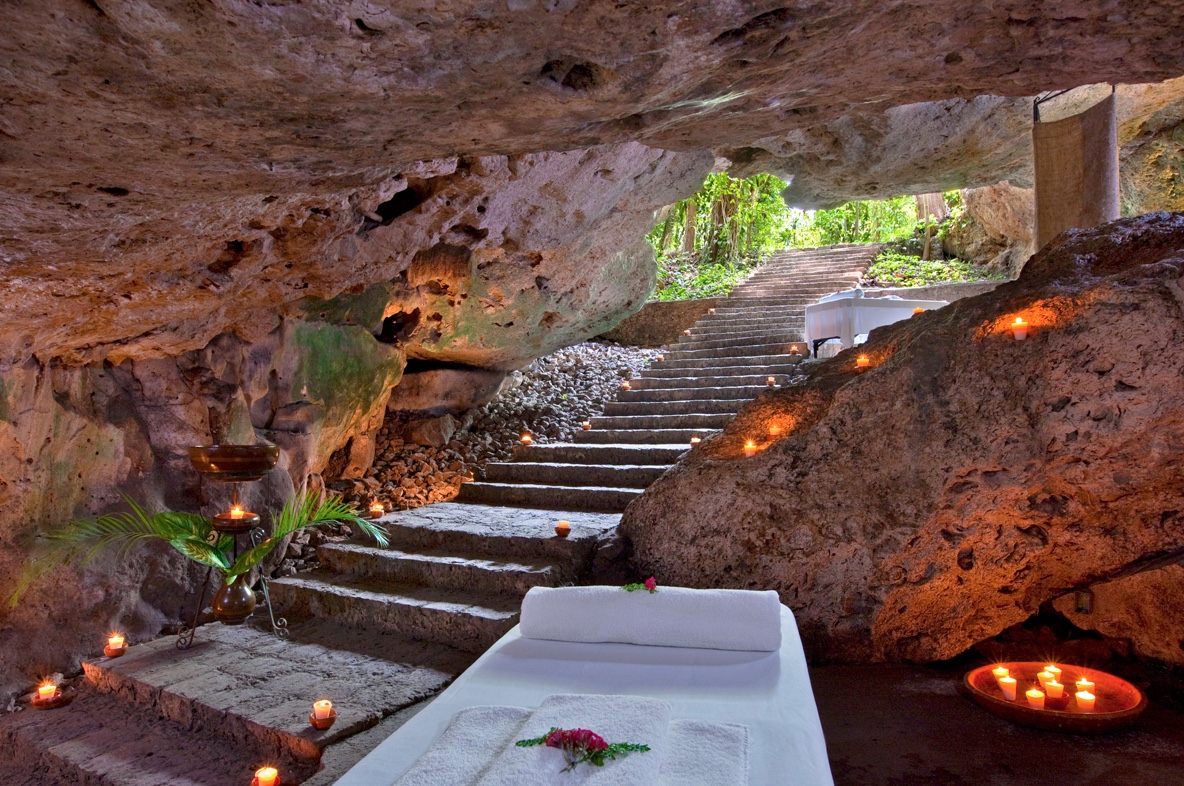
Walking a little further into the jungle is a unique underground spa that is near a small cenote.


Our Room 


The rooms come with hardwood king size beds, antique furniture and ornate, original tile floors. There's also an indoor hammock in the Maya tradition. 


Iguana Friend 
For 350 years, Hacienda Temozón has been an important part of the history of the region and now offers the traveller the ability to share the story…


Palacio Cantón is highly recommended! 

If you would like to check out more of the blog . . .  Click here

Tuesday, March 26, 2019

Palacio Cantón, Mérida

Palacio Cantón
The Palacio Cantón was built between 1904 and 1911. Its owner and builder, General Francisco Cantón Rosado (1833-1917) only lived here for six years until his death. His family continued living here as a family residence. The family lived here for several decades and the donated the building to the government of Yucatan in 1932.


Artist View of Ancient Tikal

Palacio Cantón
Later in 1948, it was declared to be the residence of the state governors. Finally in 1966 the building became the headquarters of the Regional Museum of Anthropology. It now houses an important collection of Maya culture. The halls of the building show both permanent and temporary exhibitions.


Maya Giant Mask

At the end of the 19th century, the Yucatán peninsula experienced a period of incredible prosperity. The henequen industry was developed thanks to the mechanization of North American agriculture that demanded the agave fiber for yarn, ropes and sacks.


Masks
The transformation of the countryside was reflected in the city of Mérida where numerous palaces were restored or built and where main streets were paved and wide avenues were opened. One of them was Paseo de Montejo, which had been proposed in 1888 and later constructed during the governorship of General Francisco Cantón Rosado. 

Relief
The Palacio Cantón became a benchmark for the affluent society of Yucatan durning the boom time of henequen. This Palacio is the most visible of historic buildings on Paseo de Montejo, the main street of Mérida that housed the richest residences of pre-revolutionary Yucatan.


Palacio Cantón is highly recommended! 

If you would like to check out more of the blog . . .  Click here


Hotel Rosas & Xocolate

Hotel Rosas & Xocolate
Had a great time staying at the famed Hotel Rosas & Xocolate in Mérida Mexico. The hotel is located on the most important and beautiful avenue of Mérida, Paseo de Montejo which has a historic past that makes it important historically to the Yucatan Peninsula. 

Brunch at Rosas & Xocolate


It is very close to the historical center of historic Mérida on the grand boulevard of Paseo de Montejo. It's a street that contains elegant old palaces which stand as a symbol of the incredible wealth and splendor of the "Henequen" (sisal) boom which was known as green gold.


Paseo de Montejo closed to cars on Sundays
Rosas & Xocolate is made of two abandoned old Mansions that have been transformed into a beautiful boutique hotel. The location is fantastic and there are many local attractions nearby.


View from Window over Pool 


The Rosas & Xocolate restaurant is fantastic and is considered to be among the the best in Mérida. It has very creative dishes and has some special Maya tastes.

The restaurant features a very courteous and friendly staff which adds to its charm. 


Xocolate Suite

We had a wonderful stay at the Hotel Rosas & Xocolate which was made even better with the Xocolate Suite in the original old Mansion.


Rosas & Xocolate is highly recommended! 


If you would like to check out more of the blog . . .  Click here


Thursday, March 29, 2018

Tulum Ruins

Tulum and the Caribbean 
On the last day we went to the State of Quintana Roo and visited the Maya ruins of Tulum and Coba. It is an extra popular ruin to see because its very beautiful. It's on the Maya Rivera and easy to get to from Cancun, Playa del Carmen and Pueblo Tulum itself. Even with the crowds its fun to see.


El Castillo
Historically, Tulum was an important Mesoamerican center that showed both Classical Maya and Post Classical Toltec influence. It was a major trading and religious center between 500 and the 1500s CE. Dramatically near the Caribbean Sea it is one of the most beautiful ancient sites in the Yucatan Peninsula. It was settled around 500 CE and prospered in trading and bartering. 


Temple of the Wind
Tulum's name is actually a colonial Spanish name which means wall, referring to the fortification walls that surrounded the city on three sides. The original Maya name was probably "Zama" that means "dawn" regarding to the cities position facing east across the Caribbean.

Temple of the Frescos

House of Halach Uinik – The Great Lord of Tulum


Canoe Landing Area
The Tulum archaeological site is relatively small compared with other maya cities and is one of the best preserved coastal sites. Daily tour buses bring streams of tourists and the nearby modern area has many modern stores and restaurants that make it sort of like Disneyland in Mexico. The Tulum ruins are the third most visited ancient site in Mexico after Teotihuacan and Chichen Itza. Over-crowded but still beautiful and interesting.
                                            
Tulum is highly recommended! 

If you would like to check out more of the blog . . .  Click here

Coba Ruins


La Iglesia

On our journey back to Hacienda Chichen we took a route that brought us to the Maya Ruins of Coba. As far as excavations go its the opposite of Ek' Balam. Coba is a gigantic site that's so big you either have to rent a bike or hire one of the guys that peddle you around on a tricycle Taxi. You can walk but its quite long and hot.

Ruins in the Jungle
Historically, Coba evidence shows it was first settled between 50 BCE and 100 CE. In those early times the buildings were wood on flat platforms. There's nothing left, archaeologists have only found bits of pottery. After 100 CE the city started to grow and eventually became one of the largest and most powerful city states in northern Yucatan. They controlled large farmlands, trade routes and crucially water supplies.


Coba Sacbe
Coba is a large site and is known for its Sacbes (limestone roads). The Sacbe (plural is Sacbeob) is a road like a long low platform. Its sides were walls of rough stone that enclosed a roadbed that was filled with boulders, leveled with gravel and was paved with sascab which is powdered limestone, a natural cement that hardens. The Sacbeob makes very practical and high quality roads through the jungle for hundreds of miles in all directions.


Temple Nohoch Mul
Coba had close contacts with the large city states of Guatemala and Tikal and must have had military alliances and arranged marriages among the elite. Interestingly, Coba buildings have traces of Teotihuacan architecture that shows contact with central Mexico cultures in the Classic era. Also Stelae uncovered at Coba seem show that Coba had many female rulers.

  
Coba Ball Court
Only a small portion of Coba has been cleared from the jungle and restored. Since we got there in the late afternoon we were only able to explore the Coba Group, close to the entrance. Made it to the Iglesia and one of the two ball courts. We were also able to see the Nohoch Mul Pyramid which is 42 meters tall (137 feet). It is the tallest pyramid in the Yucatan and the name Nohoch Mul means large hill. Its very popular to climb and from the top you can see a remarkable view of the Yucatan and non public areas of the Coba site. You can also see the Macanxoc lagoon in the East and the Coba lagoon to the Southwest. 


Famed Coba Tricycle Taxi
Walking through these ruins in the jungle, if you're lucky you can see parrots, butterflies and even the occasional spider monkey. Large ceiba trees grow over the ancient stonework and the sound of the jungle is wonderful. With its beautiful jungle setting, Coba is a pleasure to explore.

On our next trip to the Yucatan we will definitely return to Coba for more exploration.

Highly recommended!
 
If you would like to check out more of the blog . . .  Click here